
Cryogenic Nitrogen Tanks: The Cornerstone of Low-Temperature Storage
Cryogenic Nitrogen Tanks: The Cornerstone of Low-Temperature Storage
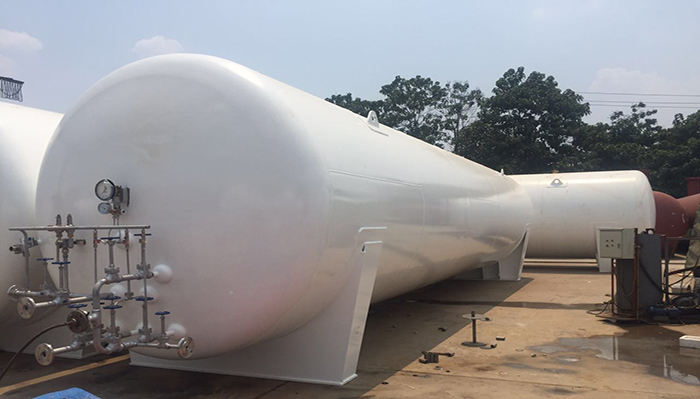
A Liquid Nitrogen Tank, often referred to as an LN2 tank, is a sophisticated piece of engineering designed for the safe and efficient storage of cryogenic liquids like oxygen, nitrogen, argon, and carbon dioxide. These tanks are characterized by their double-walled construction and vacuum insulation, which minimizes heat transfer and maintains the extremely low temperatures required to keep these substances in their liquid state. Both vertical and horizontal configurations are available to suit diverse space constraints and operational needs.
LN2 tanks play a vital role in a wide array of industrial processes. Consider their importance in metalworking, where they're used for cooling tools and components, or in semiconductor manufacturing, where they create the ultra-clean, inert environments necessary for production. Pharmaceutical companies rely on LN2 for cryopreservation of biological samples and for maintaining the integrity of temperature-sensitive medications. The fundamental function remains consistent: to reliably store and dispense liquid nitrogen at its required cryogenic temperature.
Liquid Nitrogen Tanks find application across several key fields: cryopreservation of biological material, essential for medical research and fertility treatments; medical procedures requiring localized cooling or tissue preservation; the quick and efficient freezing of food, preserving flavor and nutrients; various industrial processes involving cooling, inerting, or shrink-fitting; advanced cryogenic cooling systems for sensitive equipment; and groundbreaking research that pushes the boundaries of scientific understanding.
HNJS, a respected name in the industry, is a company specializing in cryogenic vessels and pressure equipment, including liquid nitrogen tanks and dewars. HNJS is committed to providing solutions that meet the stringent demands of industries that depend on cryogenic storage and transportation.
Cryogenic nitrogen tanks are specifically engineered to contain and transport liquid nitrogen in its supercooled state. Typically constructed from materials like stainless steel, known for its ability to withstand extreme temperature fluctuations without compromising structural integrity, these tanks represent a critical component in the cold chain.
Cryogenic liquids are defined as substances that exist in a liquid state at extremely low temperatures, typically below -150°C (-238°F). This category encompasses gases like nitrogen, oxygen, and argon, along with liquids such as helium and hydrogen. Their unique properties make them indispensable in a variety of applications.
Navigating the World of LN2 Storage Tanks: Understanding Your Options
Before investing in a liquid nitrogen tank, it's important to understand the distinct types available. Primarily, you'll encounter two categories: LN2 dewars and larger LN2 storage tanks.
Dewars are smaller, portable vessels designed for short-term storage and transportation of liquid nitrogen. Typically constructed from double-walled stainless steel, they offer excellent insulation and are available in sizes ranging from a few liters to several hundred liters. Dewars are commonly used in laboratory settings where smaller quantities of liquid nitrogen are required for experiments and research.
Cryogenic storage tanks, on the other hand, are larger, stationary tanks designed for long-term storage of significant volumes of liquid nitrogen. These tanks feature heavy-duty insulation to minimize boil-off and can hold thousands of liters of liquid nitrogen. They are essential in industries such as healthcare, food processing, aerospace, and manufacturing, where large-scale storage and distribution of liquid nitrogen are required.
The selection of a liquid nitrogen tank hinges on the specific requirements of your application. If your needs involve storing small quantities of liquid nitrogen for a limited time, a dewar may suffice. However, if you require long-term storage or a substantial volume of liquid nitrogen, a cryogenic storage tank is the appropriate choice.
The demand for dependable cryogenic liquid nitrogen tanks is particularly strong in regions such as India, Pakistan, Vietnam, Indonesia, Brazil, Russia, Mexico, the United States, Turkey, and Germany, where industries rely heavily on LN2 for various processes.
Liquid nitrogen (LN2) is an inert, colorless, odorless, non-corrosive, and non-flammable fluid maintained at extremely low temperatures. It is produced on an industrial scale through the fractional distillation of liquid air, making it readily available for diverse applications. This explains why it is the cryogenic fluid of choice in many industries, including the reproductive sector.
Inside a Liquid Nitrogen Storage Tank: A Layered Approach to Cryogenic Containment
A cryogenic liquid nitrogen tank consists of two key components: an inner tank and an outer tank. The inner tank, responsible for directly containing the liquid nitrogen, is typically constructed from stainless steel 304L (X5 CrNi 18-10), adhering to design code EN13458. The outer tank is often made from carbon steel, also designed according to EN13458.
The space between the inner and outer tanks is filled with perlite aggregation and further insulated with superinsulation materials, creating a high-vacuum environment. This combination of materials and vacuum technology dramatically reduces heat transfer, ensuring the liquid nitrogen remains at its required low temperature for extended periods.
HNJS offers a comprehensive range of bulk cryogenic storage tanks and solutions designed to provide proven reliability, reduced maintenance, and the lowest possible cost of ownership across the spectrum of liquefied gases.
To facilitate the safe and efficient distribution of both non-flammable and flammable liquid gases, HNJS provides trailers, semi-trailers, swap bodies, liquid tube trailers, and railcars, all engineered to meet the highest safety standards.
liquid nitrogen tankLN2 tankliquid nitrogenLN2tanknitrogen tankHNJS


Comments